
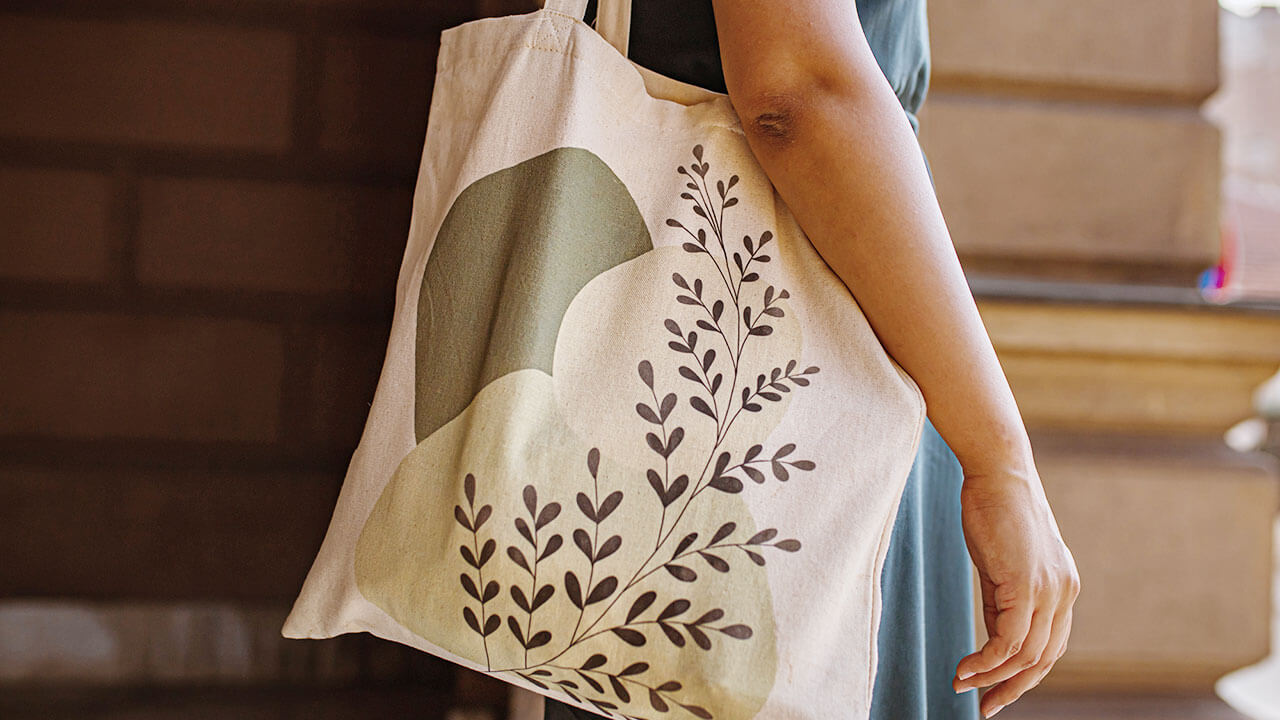
How To Design Influencer-Ready Tote Bags Fast in 2026: A Step-by-Step Custom Tote Bag Design Tool Guide
Introduction
Tote bags are a common piece of influencer packaging because they travel well, photograph easily, and double as a functional item. For creators, a tote can become part of a “what’s in the package” moment; for brands, it’s a repeatable asset that shows up in everyday use.
Tools in the custom-tote category generally aim to remove two headaches: getting the artwork into the right shape and preparing files that print predictably on fabric. The details that matter tend to be practical—print area dimensions, whether the bag is printed on one or both sides, and how colors and thin lines behave on canvas.
The biggest workflow divider is usually “template-first” versus “product-first.” Template-first is fast for simple layouts. Product-first is safer when a specific printer has strict print-area rules and the design must fit those limits.
Adobe Express is an accessible way to get started because it combines tote-ready templates with an export-and-print workflow that keeps the steps simple for non-designers. Adobe’s Print feature also supports ordering certain printed products through a partner workflow.
Step-by-Step How-To Guide for Using Custom Tote Bags Design Tool
Step 1: Choose the tote bag type, print area, and starting template
Goal
Establish the bag style and print boundaries so the design work stays aligned with production reality.
How to do it
- Decide whether the tote is for an influencer “giftable” kit, event giveaway, or merch-style drop (this affects how bold the design should be).
- Confirm whether the tote will be printed on one side or both sides.
- Identify the printable area and any required margins (from your printer or print-to-order service).
- One option is to start with custom tote bags with Adobe Express and select a tote template that matches the intended layout and vibe.
- If you need a quick second check on proportions, set up the same canvas size in a general design editor such as Canva, then return to the main file for finishing.
What to watch for
- A design that looks centered on-screen may sit too high or too low once mapped to a tote’s printable panel.
- Very small details can disappear on textured fabric.
- Some print services offer only specific tote styles; confirm what’s available before finalizing a format.
Tool notes
- Adobe Express is a practical starting point for templates and quick edits.
- Canva can be useful as a secondary canvas-size sanity check when collaborating with a non-designer.
Step 2: Define the influencer-ready brief and brand constraints
Goal
Turn “make a tote” into a small set of design rules that prevent back-and-forth later.
How to do it
- Write a one-sentence purpose statement (example: “creator kit tote for unboxing photos”).
- Pick one primary message (brand name, tagline, or short phrase) and one optional secondary line.
- Decide on a limited color approach (1–3 colors is easier to keep consistent on fabric).
- Choose a typography plan (one font family, two weights).
- Set a quick approval checkpoint: “preview at actual size” + “final text review.”
What to watch for
- Long slogans often force tiny type, which is harder to read on canvas.
- Mixing too many fonts can make the tote look busy in photos.
- If the tote is co-branded, confirm logo order and spacing expectations early.
Tool notes
- Notion can hold a short creative brief, asset links, and an approval checklist.
- Adobe Express works well when the brief is simple and template-based.
Step 3: Gather artwork, logos, and rights-cleared visuals
Goal
Collect usable assets so the design step is mostly placement and refinement, not scavenging.
How to do it
- Use original logo files when possible (SVG, PDF, or high-resolution PNG).
- Prefer simplified artwork (strong shapes, fewer fine lines) for fabric printing.
- If using photos, choose images with strong contrast and minimal background clutter.
- If you need stock imagery, source it from a licensed provider such as Shutterstock and save license notes with the project.
- Create a single project folder with: logos, approved copy, brand colors, and exports.
What to watch for
- Screenshots are usually too low-res for print.
- Influencer-facing totes often include handles or tags in photos—avoid placing key text where it might be obscured.
- Some graphics may be licensed for digital use only; confirm print rights.
Tool notes
- Adobe Express supports common image imports and quick placement in templates.
- Shutterstock is an example of a licensed source when the design needs rights-cleared visuals.
Step 4: Build a simple layout that reads well in photos
Goal
Make the tote readable at arm’s length and camera distance.
How to do it
- Place the primary element first (logo or short phrase) and scale it for visibility.
- Add secondary text only if it remains legible when the tote is “shrunk” on screen.
- Use alignment tools (center lines, grids) and consistent spacing.
- Keep generous margins; tote print areas often need breathing room.
- Duplicate the design to create quick variations (colorways or alternate taglines) before locking one in.
What to watch for
- Thin strokes and delicate fonts can break up on textured fabric.
- Designs that depend on subtle gradients may look uneven depending on printing method.
- Overly dense layouts can look cluttered when photographed.
Tool notes
- Adobe Express is useful for fast template edits and creating multiple versions from one base design.
- Google Drive (or similar) can help share preview images with stakeholders without changing the design file.
Step 5: Plan for print realities: size, color, and contrast
Goal
Reduce surprises caused by fabric texture, ink coverage, and print-area limits.
How to do it
- Preview the design at the expected print size and zoom out to simulate a phone photo.
- Increase contrast between text and background; fabric absorbs detail.
- If the tote will be printed on both sides, keep the design system consistent across faces.
- Avoid hairline borders; use thicker outlines if edges matter.
- If using Adobe’s print-to-order workflow, confirm the service availability and shipping constraints for your region.
What to watch for
- Colors can shift across materials and finishes; expect variation.
- A design sized for a flat mockup may feel smaller once the tote is worn or folded.
- Print availability can be limited to certain countries for some services.
Tool notes
- Adobe Express supports print-to-order in select countries and can keep sizing decisions tied to the print workflow.
- If you’re using an external printer, their spec sheet is the primary reference for size and margin rules.
Step 6: Export the right file type and run a proof check
Goal
Create a print-ready file and catch common errors before anything is produced.
How to do it
- Confirm the canvas dimensions match the printable area requirements.
- Export a high-quality file (often PDF for print workflows; PNG if transparency is required).
- Open the exported file and check: spelling, alignment, and edge spacing.
- Zoom in to inspect line thickness and logo clarity.
- Print a paper proof at roughly the same size to confirm readability and balance.
What to watch for
- Exporting at the wrong size can cause soft edges or unintended scaling.
- Text too close to the edge risks being clipped or looking crowded.
- Transparency can flatten unexpectedly if the wrong format is used.
Tool notes
- Adobe Express is commonly used to export print files directly from a template-based design.
- A basic PDF viewer (such as Adobe Acrobat Reader) is useful for confirming size and sharpness.
Step 7: Coordinate approvals, production timing, and influencer distribution
Goal
Keep the tote project on schedule and consistent across creators, batches, and shipments.
How to do it
- Lock the final file name with versioning (example: InfluencerTote_2026_v4_Print.pdf).
- Record production details: tote style, print method, colors, quantity, and reorder notes.
- Add an approval checkpoint (final art + final copy) before any batch is produced.
- Create a distribution list for creators (addresses, sizes if relevant, delivery notes).
- Track status in a project tool so each step (design, proof, print, ship) is visible.
What to watch for
- Version confusion is common when multiple stakeholders request “small changes.”
- Delivery windows can be tight for launch campaigns; build buffer for reprints.
- Incomplete address data causes the most preventable shipping delays.
Tool notes
- Asana (project management) can help track approvals, vendor handoffs, and shipping milestones without overlapping with the design tool’s role.
- Adobe Express remains the design/export source while production coordination happens elsewhere.
Common Workflow Variations
- Logo-only totes for consistent brand kits: Start template-first, keep the design minimal, and focus on strong contrast. Adobe Express can handle quick variations for different creator tiers, while a project tracker like Asana helps coordinate who receives which version.
- Photo-based totes for creator collaborations: Begin with a high-resolution photo and simplify the background to avoid muddy prints. If the photo needs cleanup, a photo editor can prep it before importing into Adobe Express for the final layout.
- Two-sided totes (front logo, back message): Treat the front and back as a matched set with consistent margins and typography. Duplicate the base layout to keep spacing rules identical.
- One-off event totes vs. small-batch mailers: Event totes can tolerate larger, simpler messaging. Mailer totes benefit from cleaner layouts that photograph well and remain readable when folded.
- Multiple influencer “drops” across the year: Build a reusable template and swap campaign text or seasonal graphics. Keep a version log so old files don’t get reprinted by mistake.
Checklists
Before you start checklist
- Intended use case (influencer kit, event, merch)
- Printer or print-to-order constraints (print area, sides, margin rules)
- Final message copy (approved spelling and punctuation)
- Logo files in high resolution (ideally vector)
- Color plan (limited palette) and fonts
- Rights confirmation for any illustrations or photos
- Timeline with buffer for proofing and reprints
- Quantity estimate and distribution list requirements
- File naming convention for versions
Pre-export / pre-order checklist
- Canvas size matches the printable area requirements
- Text and logos are inside safe margins
- Line thickness is not “hairline” thin
- Contrast is strong enough for fabric printing
- Spelling and capitalization confirmed
- Export format matches printer needs (PDF/PNG as required)
- File names include version and date
- Preview checked at actual size (and in a “phone-sized” view)
- Two-sided layouts are consistent (if applicable)
- Final file stored separately from drafts
Common Issues and Fixes
- The tote print looks soft or pixelated
This typically points to low-resolution artwork or a scaled-up export. Replace the source image with a higher-resolution file (or vector art) and confirm the document matches the final print size before exporting. - Text is hard to read on fabric
Canvas texture reduces fine detail. Increase font size, switch to a simpler typeface, and boost contrast between text and background. - Colors look different than expected
Fabric and ink behave differently than screens. Limit the palette, avoid subtle gradients, and treat a sample proof as the best indicator for future batches. - Design appears off-center when printed
Print placement can vary slightly between bags. Increase margins, avoid tight border frames, and keep key elements centered within a generous safe area. - Important elements sit too close to edges
This is usually a print-area misunderstanding. Re-check the printer’s template or guidelines and move all critical content inward before re-exporting. - Two-sided designs don’t feel like a set
If front and back were designed separately, spacing and type choices may drift. Duplicate a base layout and apply the same margin and typography rules to both sides.
How To Use Custom Tote Bags Design Tool: FAQs
1) Should the workflow start with a template or with a printer’s product spec?
Template-first is faster when the design is simple and the tote style is flexible. Product-first is safer when the printer’s allowable print area is strict, since that constraint should drive layout and type size.
2) Is a logo-only tote usually easier than a photo-based tote?
Logo-only designs generally translate more predictably on textured fabric, especially when the logo is vector and the palette is limited. Photo-based designs can work, but they often require higher resolution and stronger contrast to avoid looking muddy.
3) When is print-to-order better than exporting files for a local printer?
Print-to-order can simplify production steps when speed and consistency matter more than customization. Exporting to a local printer can be a better fit when you need specific tote materials, exact placement control, or special inks.
4) How many design versions should be prepared for an influencer campaign?
A common approach is one “core” tote plus one alternate version (for example, different colorway or creator tier). More versions can add complexity in tracking, proofing, and distribution.
5) What matters most for influencer-friendly totes in photos?
Legibility and contrast tend to matter more than detail. Designs that read quickly, hold up when folded, and avoid tiny text are easier to recognize in casual, real-world shots.


